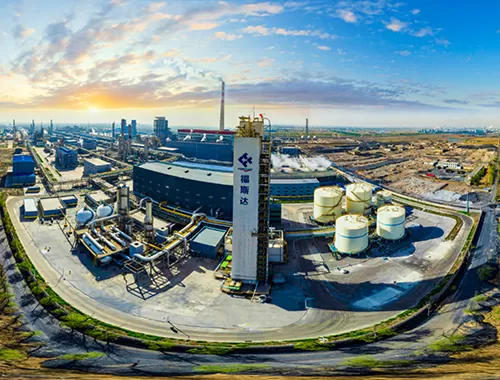
How Does an Air Separation Unit Work?
At its core, the operation of an air separation plant involves transforming air into its constituent parts. Let's break down the process, often referred to as "air separation plant design":
Compression
Atmospheric air enters the ASU and is compressed. Fortune Gas, an innovator in this field, employs a low-pressure process that reduces energy consumption.
Purification
Impurities such as moisture (H2O) and carbon dioxide (CO2) are removed using a Pre-Purification Unit (PPU). This ensures that only clean, filtered air enters the next stage.
Cooling
The purified air is cooled to cryogenic temperatures using advanced heat exchangers, bringing it to a state where components can be separated based on their unique boiling points.
Separation (Distillation)
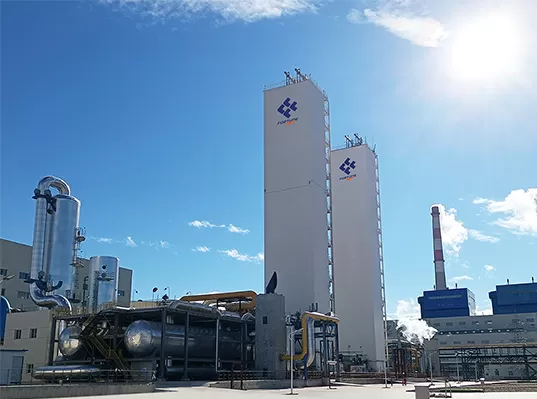
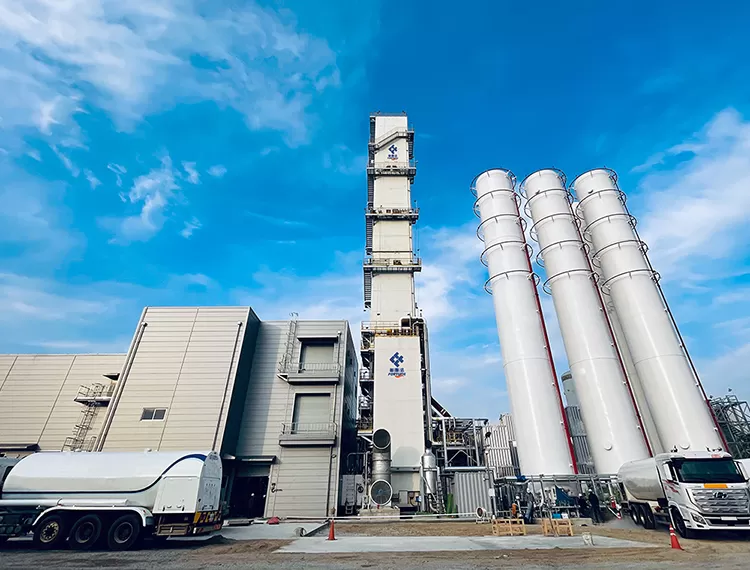
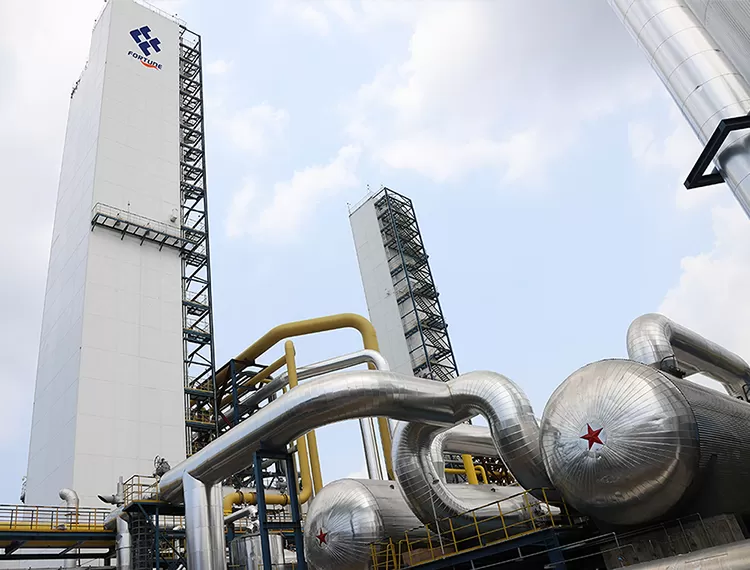
Inside the "Cold Box," the core of an ASU, air components are separated through cryogenic distillation. For applications requiring advanced recovery, some systems are also capable of neon gas separation from ASUs, in addition to oxygen, nitrogen, and argon.
Key Applications & Industries Served by ASUs
Air Separation Units are vital to numerous industries. Here’s a quick overview of their primary applications:
Metallurgy (e.g., Steel Making)
Oxygen supports combustion in blast furnaces to produce molten steel.
Chemical & Petrochemical
Nitrogen is used for inerting, purging, and transferring reactive chemicals, while oxygen powers combustion and oxidation reactions.
Keyword spotlight: asu for chemical plant
Healthcare
Produces medical-grade oxygen required for life support and respiratory treatments.
Electronics
Supplies ultra-high purity nitrogen crucial for semiconductor manufacturing.
Keyword spotlight: asu for gas bottling plant
Why Choose a China Air Separation Unit Manufacturer?
When selecting an ASU supplier, China has become a global powerhouse. Here are three reasons why manufacturers like Fortune Gas stand out:
Cost-Efficiency
A China air separation plant manufacturer offers the perfect balance between affordability and functionality. With lower production costs, Chinese suppliers deliver excellent pricing while maintaining competitive quality.
Global Technology Standards
Top manufacturers like Fortune Gas adhere to stringent international regulations (e.g., ASME and CE certifications) and incorporate state-of-the-art features, such as "Smart Plant" control systems that enhance operational efficiency.
Proven Export Capability
Leading suppliers consistently export world-class ASUs to global markets. Fortune Gas, for instance, has established itself as a trusted ASU supplier in Asia, with tailor-made solutions for industries worldwide.
Fortune Gas: Leading the Way in Cryogenic Solutions
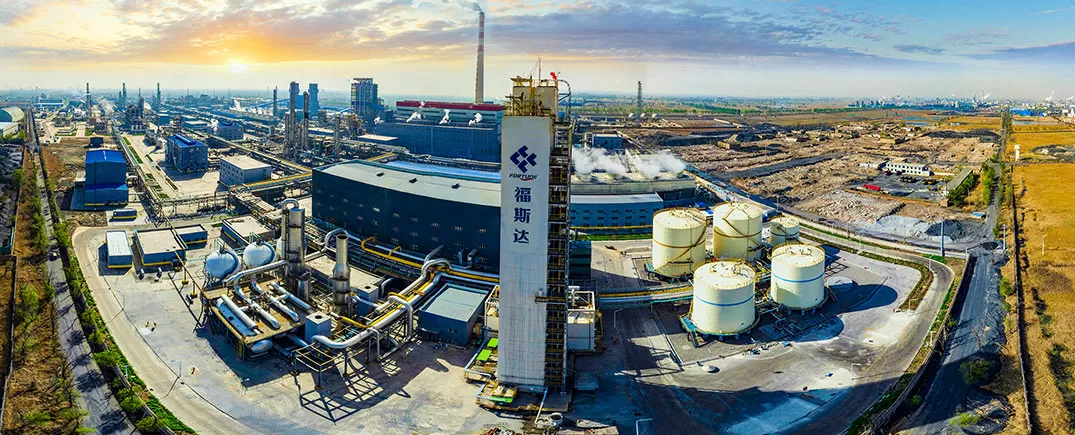
When it comes to cryogenic air separation units, Fortune Gas is a clear leader in innovation. Here's why:
Proprietary Technology: Fortune's "low-pressure process" minimizes energy costs, while their cutting-edge modular cold boxes are industry pioneers.
Comprehensive Range: From compact small air separation units to massive industrial plants capable of producing 120,000 Nm³/h, Fortune Gas has a solution to match your needs.
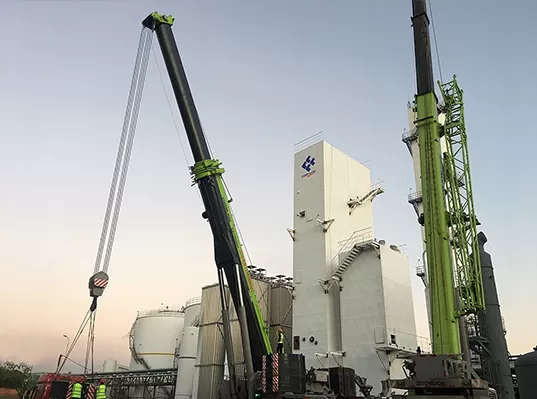
Complete Service: Offering end-to-end turnkey services, Fortune Gas takes care of everything—from design and manufacturing to installation and commissioning.
Whether you're looking for a large-scale installation or an efficient modular ASU, Fortune delivers reliable solutions designed to optimize your operations.
FAQs
Q: What is the full form of ASU?
A: ASU stands for Air Separation Unit.
Q: What gases are produced by an ASU?
A: Common outputs include nitrogen, oxygen, and argon, while some systems also recover neon, krypton, and xenon.
Q: What is the difference between a Nitrogen Generator and an ASU?
A: Nitrogen generators typically produce nitrogen for small- to medium-scale applications with lower purity. In contrast, ASUs provide high-purity nitrogen and can also produce oxygen and argon.
Q: How much does an air separation unit cost?
A: Costs vary based on capacity, output purity, and design requirements. Contact Fortune Gas for tailored quotes.