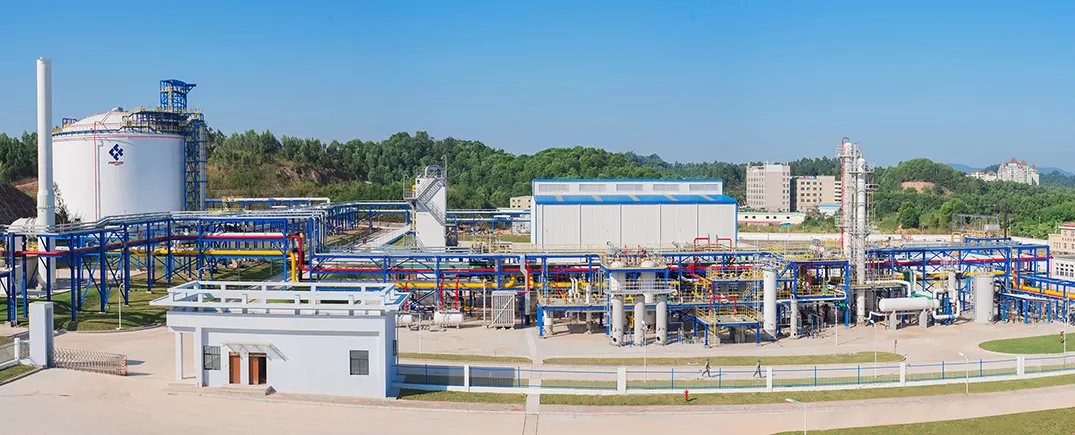
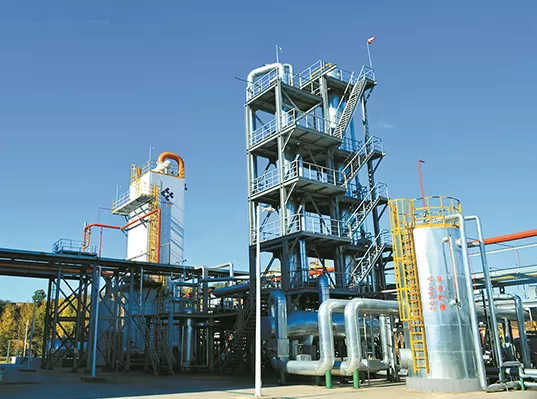
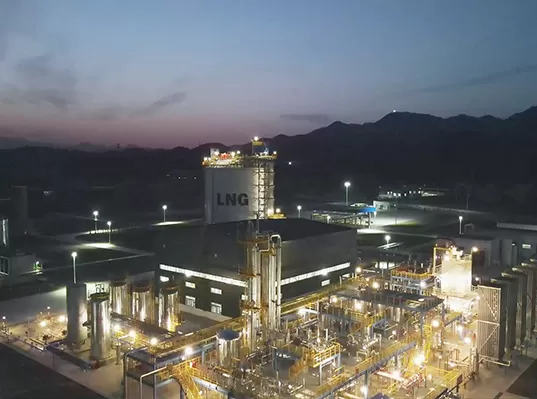
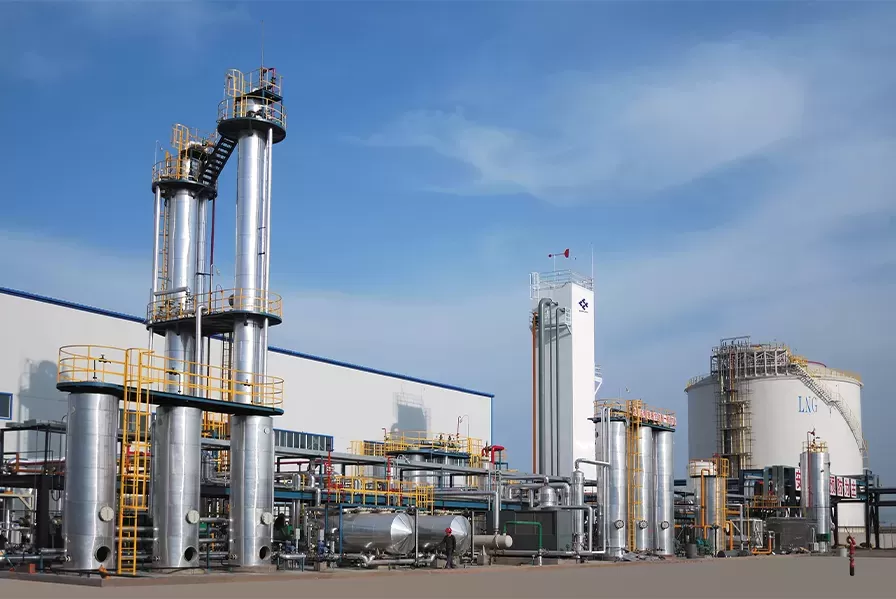
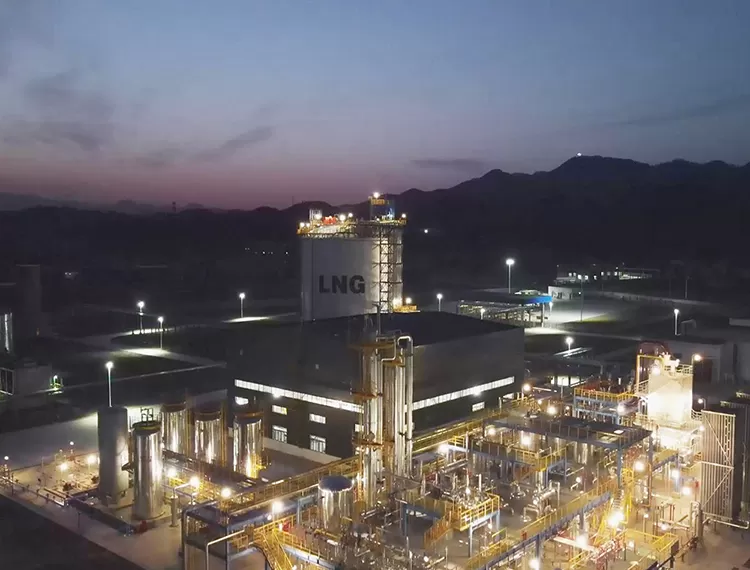
Application fields: Pipeline Gas, Coal Bed Gas (Coal Bed Methane), Coke Oven Gas, Shale Gas, Bio Gas, Coal Gas Purification and Liquefaction, BOG Recovery and Liquefaction, LNG Vaporization Station, LNG Filling Station
*We provide excellent solutions for natural gas free of charge
Fortune Gas stands as a global authority in LNG plant design, engineering, and construction. With decades of experience, advanced technologies, and an unwavering commitment to safety and quality, the Fortune Gas team delivers turnkey solutions tailored to meet diverse project needs.
Natural Gas pretreatment typically consists of Mercury Removal, Acid Gas Removal-Amine Wash, Dehydration, Heavy Hydrocarbon Removal, Natural Gas Liquid (NGL) Recovery, Nitrogen Rejection Unit, Etc. Depending on the feed gas composition, a matching pretreatment scheme is selected
Natural gas cooled to cryogenic temperatures of approximately –160°C to become in liquid. Depending on the various scale and requirements, Fortune has developed different liquefication Process, including Nitrogen Refrigerant Cycle, Single Mixed Refrigerant Cycle (SMRC), Dual Mixed Refrigerant Cycle (DMRC), Propane-Mixed Refrigerant Cycle (C3MRC) and Reliquefication of Boil-Off Gas (BOG)
An LNG plant is a complex industrial facility designed to purify and liquefy natural gas for transportation and storage. The primary function of an LNG plant is to convert natural gas into its liquid form by cooling it to -162°C, reducing its volume exponentially and enabling global distribution.
Why is LNG critical to modern energy infrastructure?
LNG plays a dual role: it ensures energy security while lowering emissions compared to other fossil fuels. Fortune Gas, with its turnkey EPC (Engineering, Procurement, and Construction) solutions, is at the forefront of delivering efficient LNG plants that meet increasing energy demands responsibly.
The Pre-Treatment Phase: Natural Gas Purification Process
Before liquefaction, natural gas must undergo an essential pre-treatment process to ensure operational efficiency and product quality. This phase is critical to removing impurities that could hinder liquefaction or damage equipment. Here’s how Fortune Gas addresses the technical intricacies:
Acid Gas Removal
CO₂ and H₂S are removed via chemical absorption methods to prevent the destabilization of cryogenic processes. Acid gas removal improves the safety and environmental compliance of the LNG plant.
Dehydration Unit
Removing water vapor is paramount to avoid the formation of ice and hydrates in cryogenic heat exchangers. Fortune Gas incorporates advanced molecular sieve technology for high-efficiency dehydration.
Heavy Hydrocarbon & Mercury Removal
Heavy hydrocarbons and mercury are culprits behind equipment degradation. Using activated carbon beds and molecular sieves, Fortune Gas ensures the protection and longevity of cryogenic systems.
Why is natural gas treatment a prerequisite for liquefaction?
Proper purification guarantees the stability of the liquefaction process and maximizes the longevity of key components, such as compressors and cold boxes.
Natural Gas Liquefaction Process: Step-by-Step
The liquefaction of natural gas involves precise engineering and advanced thermodynamic principles. Fortune Gas structures the process into key stages:
Compression: Natural gas is pressurized to optimize the cooling process.
Heat Exchange: It is rapidly cooled to sub-zero temperatures via cryogenic heat exchangers.
Expansion: The Joule-Thomson effect facilitates further cooling as gas is expanded to lower pressure.
Storage: Liquefied natural gas is stored in cryogenic tanks at -162°C, ready for transport.
Fortune Gas designs cryogenic systems to maximize process efficiency while adhering to international safety standards.
Fortune Gas deploys the industry’s most advanced technologies to ensure optimal performance of LNG plants across varied applications.
SMR (Single Mixed Refrigerant) Process
Ideal for small-to-medium LNG plants, the SMR process is cost-efficient, compact, and reliable.
Nitrogen Expansion Cycle
This technology stands out for safety and simplicity, making it suitable for projects prioritizing operational ease and flexibility.
Comparison Table: LNG Liquefaction Technologies
Technology
Capex
Opex
Capacity
Safety
SMR Process
Low
Moderate
Small-Medium
Moderate
Nitrogen Expansion Cycle
Moderate
Low
Medium
Enhanced Safety
Fortune Gas ensures the selection of technology tailored to the specific needs and goals of your project.
Engineering Excellence: LNG Plant Design and Construction
An LNG plant’s success depends on optimized engineering, modular designs, and adherence to international safety standards. Fortune Gas excels in delivering end-to-end solutions.
Modular vs. Stick-Built Approaches
The modular approach minimizes costs and accelerates deployment timelines. Fortune Gas is a global leader in LNG modularization, providing facilities that are pre-engineered and pre-constructed for reduced on-site effort.
Safety Standards
Adhering to ASME, ISO, API, and CE protocols, Fortune Gas designs explosion-proof and hazard-resilient LNG facilities to meet stringent global compliance standards.
Turnkey Solutions
From feedstock analysis to commissioning, Fortune Gas offers comprehensive project management, ensuring streamlined execution and reduced project risks.
Fortune Gas LNG Plant Video
Case Studies: Fortune Gas Success Stories
Project 1: Southeast Asia Mid-Sized LNG Plant
Built using modular construction techniques, this 2.5 MTPA (Million Tonnes Per Annum) LNG plant set benchmarks for efficiency across Southeast Asia.
Project 2: Middle Eastern Peak-Shaving Facility
A cutting-edge Nitrogen Expansion Cycle plant meets peak demand scenarios while maintaining low emissions.
These successful projects are a testament to Fortune Gas’s unparalleled expertise in designing and executing LNG solutions globally.
FAQs about LNG
What is the difference between a gas treatment plant and a liquefaction plant?
A gas treatment plant focuses on purifying raw natural gas to remove impurities like CO₂ and H₂S, while a liquefaction plant converts the purified gas into liquid form for transportation and storage.
Which liquefaction technology is best for peak-shaving?
Nitrogen Expansion Cycle technology is best suited for such scenarios due to its safety features and operational simplicity.
How does Fortune Gas ensure the purity of the LNG?
Purity is ensured through state-of-the-art gas treatment processes, including acid gas removal, dehydration, and mercury scrubbing, complemented by precision-engineered equipment.
We use cookies to offer you a better browsing experience, analyze site traffic and personalize content. Part of the tracking is necessary to ensure SEO effectiveness, By using this site, you agree to our use of cookies.
Visit our cookie policy to learn more.