Raw natural gas is rarely ready for commercial use immediately after extraction. Whether sourced from deep conventional reserves, associated oil field networks, shale formations, or coalbed methane seams, untreated gas is almost always accompanied by a problematic blend of acid components.
The primary culprits are hydrogen sulfide (H2S) and carbon dioxide (CO2), often accompanied by trace organic sulfur compounds such as carbonyl sulfide (COS) and mercaptans.
For midstream operators, gas utility developers, and LNG infrastructure engineers, executing a highly efficient natural gas desulfurization strategy is not merely an optional refinement step. It is an absolute operational mandate that determines the physical safety, regulatory compliance, and long-term economic viability of the entire asset.
1. The Hidden Threat: Why Acid Gases Must Be Removed
Leaving acid gases untreated within a natural gas stream triggers critical operational hazards across downstream infrastructure, fundamentally categorized into three primary threats:
Severe Equipment Corrosion: In the presence of moisture, CO2 forms carbonic acid, causing extensive pitting in carbon steel. More catastrophically, H2S induces Sulfide Stress Cracking (SSC) and Hydrogen-Induced Cracking (HIC), leading to sudden, brittle failures of high-pressure pipelines and pressure vessels.
Cryogenic Solidification (Freezing): In Liquefied Natural Gas (LNG) processing, the feed gas is chilled to -162°C. Because CO2 freezes solid at -78.5°C, any residual carbon dioxide will freeze inside the compact heat exchangers of the main cryogenic cold box, causing severe structural blockages and emergency plant shutdowns.
Toxicity and Catalyst Poisoning: H2S is highly toxic, posing immediate lethal risks to plant personnel. Furthermore, sulfur compounds act as aggressive catalyst poisons, permanently deactivating downstream catalyst beds in gas-to-liquids (GTL) or chemical synthesis applications.
2. Desulfurization as a Pretreatment Gatekeeper
In a modern gas processing plant, desulfurization does not operate in isolation. It serves as the primary gatekeeper for a highly synchronized, multi-stage pretreatment train. The typical sequence of midstream gas conditioning must be precisely ordered to protect each subsequent process step:
Mercury removal typically happens first to protect aluminum heat exchangers from liquid metal embrittlement. Immediately following, the acid gas removal unit (AGRU) handles the bulk separation of H2S and CO2.
Placing desulfurization ahead of the dehydration unit is critical because the desulfurization process utilizes an aqueous solvent that saturates the gas stream with water vapor. By knocking out the heavy acid gas load first, the downstream molecular sieve dehydration beds can focus exclusively on extracting moisture, achieving the deep water dew points (under 1 ppm) required for cryogenic service.
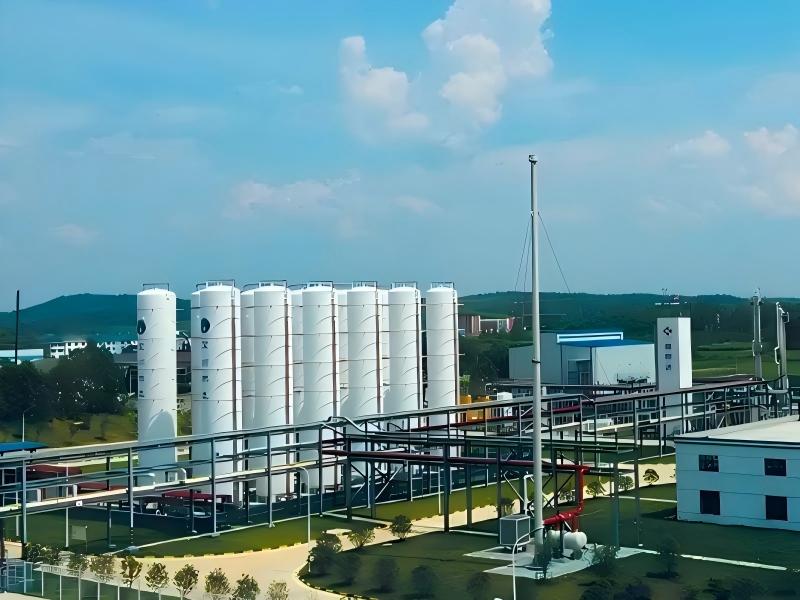
3. Overview of Commercial Acid Gas Removal Technologies
Industrial engineers utilize several distinct chemical and physical mechanisms to separate acid components from the hydrocarbon stream. Selecting the correct technology depends heavily on the inlet acid gas concentration, total operating pressure, and the specific purity requirements of the destination network.
Chemical Solvent Absorption (The Amine Standard)
Chemical absorption relies on an exothermic, reversible reaction between the acid gases and an aqueous amine solution. It is highly valued for its ability to strip H2S and CO2 down to extremely stringent specifications (under 4 ppm H2S and under 50 ppm CO2) across a wide range of operating pressures. Because the bond is chemical, regeneration requires significant thermal energy to break the molecular attachment.
Physical Solvent Absorption
Physical solvents absorb acid gases strictly based on gas solubility and partial pressure rather than a chemical reaction. This technology becomes highly efficient when treating raw gas streams with exceptionally high concentrations of acid components at elevated operating pressures.
Because the solvent performance relies entirely on physical pressure, regeneration is achieved primarily by depressurizing (flashing) the liquid, which requires substantially less thermal energy than chemical systems. However, physical solvents often co-absorb heavy hydrocarbons, leading to valuable product loss in certain gas profiles.
Solid Bed Adsorption (Fixed Bed Adsorbents)
Fixed-bed systems utilize solid media—such as iron sponge, zinc oxide, or specialized molecular sieves—to capture sulfur molecules through physical trapping or non-regenerable chemical scavenging.
These batch systems are ideal for small gas volumes or as secondary polishing steps to remove trace sulfur. Because the media is consumable or requires batch thermal cycles, solid beds become economically impractical for high-volume, heavily contaminated sour gas streams.
4. The Workhorse: Amine Wash System – Principle and Process Flow
The Absorption Zone
Sour raw gas enters near the bottom of the high-pressure Absorber Column and flows upward through internal trays or structured packing. Simultaneously, the cooled, lean amine solvent is pumped into the top of the tower and flows downward.
As the two phases counter-currently pass each other, the alkaline amine molecules chemically capture the weak acid molecules. The cleaned, sweet gas exits the top of the column, ready for downstream dehydration.
The Regeneration Zone
The sulfur-saturated solvent, now known as "rich amine," collects at the base of the absorber. It is depressurized and passed through a lean/rich heat exchanger before entering the lower-pressure Regeneration Column (Stripper).
An industrial reboiler at the base of the stripper adds thermal energy, boiling the solution to generate stripping steam. This heat breaks the weak chemical bonds, driving off the H2S and CO2 gases as an overhead waste stream. The restored "lean amine" solvent is cooled, filtered, and pumped back to the absorber tower to continue the cycle continuously.
5. How to Select a Desulfurization Plant Manufacturer
Because natural gas pretreatment requires absolute mechanical integrity under high pressures and highly corrosive conditions, selecting an engineering and fabrication partner is a critical project risk factor. Global developers should evaluate potential suppliers using three core criteria:
Full Mechanical Traceability and Metallurgical Expertise
Amine service is highly susceptible to hydrogen blistering and amine stress corrosion cracking. A world-class manufacturer must demonstrate rigorous material controls, utilizing specialized low-carbon steels or cryogenic-grade stainless steels with full material test report (MTR) traceability. All structural and pressure-retaining welds must undergo advanced Non-Destructive Testing (NDT)—including radiographic and ultrasonic inspections—to guarantee long-term operational safety.
Advanced Modular Fabrication Capabilities
Sourcing equipment from an experienced China natural gas desulfurization plant manufacture provides a major project advantage through complete skid-mounted modular engineering. Rather than assembling thousands of loose valves, instruments, and columns on-site under unpredictable weather conditions, the entire amine wash block is fabricated, piped, wired, and pre-commissioned within a controlled factory setting.
This modular approach ensures pristine build quality, protects sophisticated electronic components, and substantially reduces field installation labor costs and timeline risks.
Proven Thermodynamic Design Experience
A desulfurization system must be meticulously tailored to your specific feed gas profile. The manufacturer must possess deep engineering expertise to select the optimal amine formulation (such as MEA, DEA, MDEA, or customized formulated blends), accurately calculate column hydraulics, and design optimized heat integration networks that lower the reboiler's thermal energy consumption.
Conclusion: Partnering for Long-Term Operational Excellence
Achieving reliable, cost-effective natural gas desulfurization requires a precise balance between chemical process simulation, high-pressure equipment fabrication, and lifecycle energy efficiency. An engineered amine wash system provides the operational flexibility needed to handle fluctuating upstream gas volumes and volatile acid gas profiles while protecting critical downstream assets.
As a premier national-level high-tech enterprise, Fortune Gas delivers complete, turn-key solutions across the industrial gas and midstream processing sectors. Operating from an advanced 54,000-square-meter manufacturing base, our specialized engineering teams design, build, and deliver extra-large cold boxes, high-capacity fractionating columns, and heavy-duty gas purification modules.
With over 1,000 proprietary process packages deployed successfully across the United States, Europe, the Middle East, and Southeast Asia, Fortune Gas is an approved partner for global energy leaders including Shell, Linde, Air Products, and Sinopec. From complex custom projects to standard skid-mounted systems, we design tailored solutions that optimize uptime and maximize long-term asset value.
To learn how our engineering team can optimize your pretreatment infrastructure, explore our integrated Natural Gas Treatment & Liquefaction solutions today.
Frequently Asked Questions (FAQ)
What is the practical difference between an primary amine like MEA and a tertiary amine like MDEA?
Primary amines like Monoethanolamine (MEA) possess high chemical reactivity and remove both H2S and CO2 down to very low levels, but they require substantial heat for regeneration and are more corrosive. Tertiary amines like Methyldiethanolamine (MDEA) react selectively with H2S while allowing a controlled portion of CO2 to slip through, which significantly reduces the thermal energy required by the reboiler if complete CO2 removal is not mandatory.
What causes foaming in an amine wash system, and how is it managed?
Amine foaming occurs when liquid hydrocarbons, condensed well fluids, fine particulate iron sulfides, or degradation products accumulate in the circulating solvent, disrupting gas-liquid contact. Operators manage foaming by implementing strict upstream filtration—including mechanical particulate filters and activated carbon beds—and by utilizing targeted chemical antifoam injections when necessary.
Can an amine system remove organic sulfur compounds like mercaptans or COS?
Standard chemical aqueous amine formulations are highly effective at stripping inorganic H2S and CO2, but have very low solubility for organic sulfur species like methyl mercaptan. If a feed gas analysis indicates a high organic sulfur content, engineers must utilize specialized physical-chemical solvent blends (such as sulfinol mixtures) or position a downstream molecular sieve adsorption bed to capture the remaining trace compounds.

