In modern petrochemical manufacturing, gas synthesis, and midstream energy infrastructure, processing efficiency is dictated by the laws of thermodynamics. Raw gas streams—whether derived from refinery cracker blocks, unconventional shale reserves, or industrial syngas generation—are highly complex mixtures of volatile hydrocarbons and light gases. Separating these components into high-purity, commercially viable products requires dropping temperatures far below environmental baselines.
At the absolute center of these deep thermal operations sits the cryogenic cold box. Far more than a simple storage container, it serves as the primary thermodynamic gatekeeper for industrial gas plants. It provides a highly engineered, deeply insulated environment where complex gas mixtures can be cooled, liquefied, and fractionalized with minimal energy waste.
For EPC contractors, project developers, and plant managers aiming to optimize refinery profit margins and secure extreme operational uptime, understanding the core mechanics and strategic role of an industrial cold box is the foundation of successful facility design.
What is a Cryogenic Cold Box?
In deep freezing and processing applications, operating temperatures routinely fall between -100 degrees Celsius and -196 degrees Celsius. At these extreme levels, exposed process piping faces two major challenges: massive "cold energy" loss due to ambient heat leaking into the system, and immediate atmospheric moisture icing. Left unchecked, ambient heat entry forces upstream compressors to work harder, driving up energy bills, while ice accumulation causes catastrophic mechanical failures.
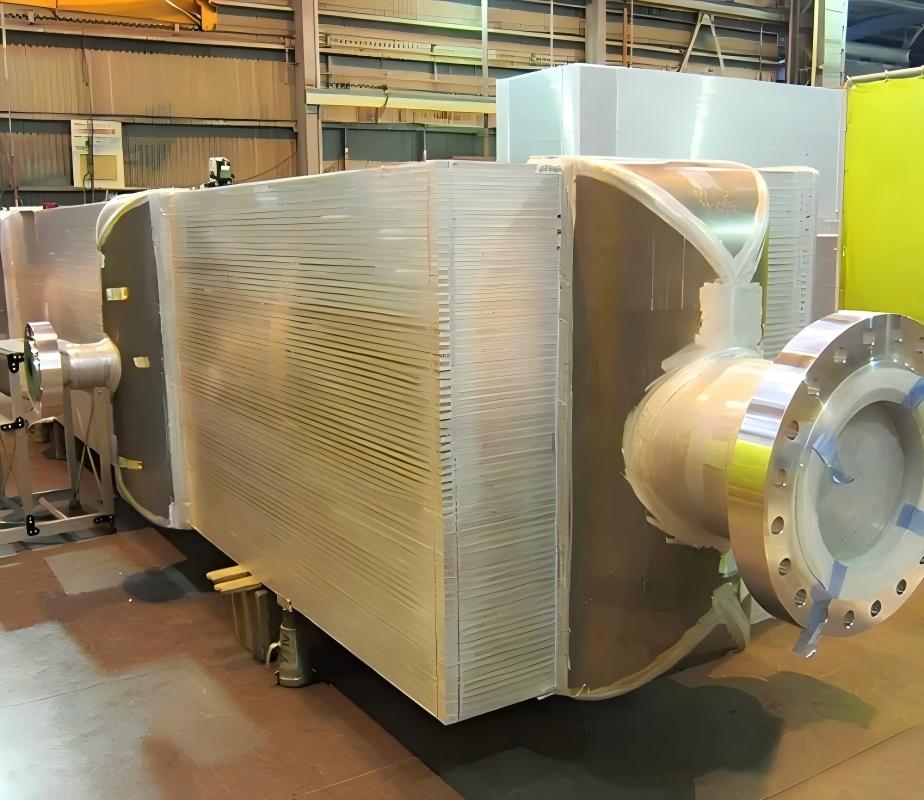
To solve this, engineers utilize a cryogenic cold box. This system functions as a factory-assembled, structurally integrated powerhouse. It encloses high-performance plate-fin heat exchangers, multi-stage distillation columns, internal piping, control valves, and phase separators within a rigid, heavy-gauge carbon steel shell.
The interior spaces of the structure are packed tight with ultra-low conductivity insulation material—typically expanded perlite—and kept under a slight positive pressure using dry nitrogen gas. This completely isolates the internal equipment from ambient heat and excludes moisture-laden atmospheric air, allowing the plant to sustain stable deep freezing conditions for decades.
Critical Functions of the Cold Box in Industrial Applications
The primary objective of an industrial cold box is to exploit the varying boiling points of diverse gases to achieve precise fluid separation or complete liquefaction. Because different molecules shift from gas to liquid at distinct temperatures, the cold box uses a highly synchronized sequence of internal counter-current heat exchanges and multi-stage distillation steps to isolate target molecules.
1. Thermal Management and Counter-Current Heat Exchange
The core workhorse inside the box is the aluminum plate-fin heat exchanger. These units provide an exceptionally high surface-area-to-volume ratio, allowing multiple high-pressure gas streams and low-temperature boiling liquids to cross paths cleanly. By recovering cold energy from exiting waste streams to pre-cool incoming feed gas, the internal heat exchanger network drastically slashes the facility's overall compression energy demands.
2. Multi-Component Deep Distillation
Once the incoming gas is chilled close to its dew point, it enters integrated fractionating columns wrapped inside the structural shell. As gas rises and cryogenic liquid drains down through the internal column packing, thousands of miniature micro-evaporations and condensations take place. This process allows light elements, like hydrogen or methane, to flash off the top while heavier components pool at the base as high-purity liquids.
Strategic Applications Across the Petrochemical Train
The versatility of specialized cryogenic cold box configurations allows them to serve as the technological backbone across several high-value chemical processing and environmental protection trains:
Propane Dehydrogenation (PDH) Separation: In modern PDH plants focused on on-purpose propylene production, the output gas is a challenging mix of hydrogen, methane, ethane, propylene, and unreacted propane. A custom PDH cold box chills this stream systematically, liquefying the valuable C3 molecules so they can be separated from light fuel gases and recycled cleanly.
Ethylene and Demethanizer Operations: Steam cracking facilities rely on an ethylene cold box and dedicated demethanizer modules to manage the cold section of the refinery. Operating under high pressures and deep negative temperatures, these units drive highly volatile methane out through the tower overhead while retaining the primary ethylene product below.
Synthesis Gas Clean-up (HYCO & Liquid Nitrogen Wash): For hydrogen and carbon monoxide production plants, a HYCO separation module splits methane, CO, and hydrogen into distinct product lines. Similarly, in large-scale ammonia synthesis, a liquid nitrogen wash system uses liquid nitrogen at roughly -190 degrees Celsius to scrub trace carbon monoxide and methane impurities down to parts-per-million levels, protecting downstream catalysts from poisoning.
Carbon Capture and Upgrading: In the environmental sector, industrial-grade and food-grade CO2 cold boxes are used within Carbon Capture, Utilization, and Storage (CCUS) facilities. Deep freezing distillation isolates carbon dioxide from flue gases, purifying it for deep-well geological storage or commercial food industry applications.
Technical Comparison of Cold Box Process Configurations
To help engineering teams evaluate equipment integration paths, the following matrix breaks down the technical parameters and target metrics across standard processing configurations:
| Process Module | Typical Operating Temp Range | Core Separation Mechanism | Key Structural Components | Primary Process Target |
|---|
| PDH Separation Box | -40°C to -120°C | Partial condensation & high-pressure C3 recovery | Multi-stream aluminum heat exchangers, phase separators | Maximizes propylene yields while separating light hydrogen gas. |
| Ethylene / Demethanizer | -60°C to -140°C | Deep cryogenic fractionating and reflux boiling | Packed distillation columns, custom low-temperature valves | Strips methane impurities out of the primary ethylene stream. |
| Liquid Nitrogen Wash | -170°C to -195°C | Liquid nitrogen absorption washing | High-vacuum column shells, cryogenic liquid distribution trays | Suppresses CO2 and CO down to ppm levels for synthesis gas. |
| Food-Grade CO2 Box | -20°C to -55°C | Sub-cooling liquefaction & trace impurity stripping | Dual-pass condenser blocks, catalytic stripping beds | Eliminates VOCs and sulfur to produce beverage-safe CO2. |
Sourcing and Engineering Selection Criteria
Because an industrial cold box is subjected to extreme thermal stresses during start-up, shutdown, and normal operational cycles, selecting an expert engineering partner is paramount. Global procurement teams should carefully evaluate manufacturers against three essential performance pillars:
Advanced Hydraulic and Process Simulation
Every raw gas feedstock possesses a unique chemical fingerprint and pressure profile. A manufacturer must have mature process engineering teams capable of modeling multi-phase fluid dynamics using state-of-the-art simulation software. Improper sizing of internal lines or incorrect calculation of heat exchanger surface margins leads directly to internal flow bottlenecks, high pressure drops, and a failure to meet product purity targets.
High-Tonnage Modular Fabrication
On-site assembly of thousands of feet of low-temperature alloy piping and sensitive instrument arrays under unpredictable field conditions introduces immense project risk. Sourcing a completely modularized, pre-tested package built within a highly controlled factory environment ensures pristine weld quality and drastically shortens site installation timelines.
Conclusion: Engineering Absolute Reliability with Fortune Gas
The strategic utilization of a highly optimized cryogenic cold box is the defining factor that separates high-efficiency processing assets from financially strained operations. By providing absolute thermal containment and precise component fractionation, these systems protect downstream machinery, lower raw energy overheads, and guarantee the delivery of premium-purity industrial products.
As an established global authority in deep thermal separation and process engineering, Fortune Gas delivers comprehensive, turn-key solutions tailored for the most demanding international environments. Operating from an advanced 54,000-square-meter manufacturing facility, our specialized teams handle the complete thermal design, mechanical calculation, and structural modularization of high-performance processing systems.
With more than 1,000 successful process packages delivered across Europe, the Americas, the Middle East, and Southeast Asia, we maintain strict adherence to international standards including ASME, API, and CE/PED. Fortune Gas provides energy infrastructure developers with the exact blend of thermodynamic precision and heavy-equipment manufacturing expertise required to build long-term profitability. To explore how our design teams can optimize your next deep thermal separation project, contact our engineer team today.
Frequently Asked Questions (FAQ)
What is the role of perlite in an industrial cold box?
Expanded perlite is an inorganic powder with exceptionally low thermal conductivity. Packed tightly around the internal piping, it eliminates air gaps and prevents ambient heat from leaking into the deep freezing zones.
How do operators prevent freezing inside a cryogenic cold box?
Upstream pretreatment must strip contaminants before they reach their solidification points. Molecular sieves must lower moisture to under 1 ppm, and amine wash systems must reduce carbon dioxide to under 50 ppm.
What causes thermal stress in a cold box, and how is it managed?
Thermal stress is caused by sharp temperature differences during startup or shutdowns, which make metal pipes expand or contract at varying rates. Engineers manage this by adding expansion loops and enforcing strict, gradual cooling protocols.

