Air separation is an unforgiving process where thermal performance, component reliability, and power consumption directly govern everyday operating costs. For industrial gas infrastructure, chemical processing plants, and metallurgical complexes, choosing the correct scale of an air separation unit is the primary driver of decades-long return on investment.
Whether your facility requires a continuous stream of high-purity oxygen, nitrogen, or rare noble gases like argon, matching the proper equipment scale to your downstream production capacity is a critical engineering decision.
A minor mismatch in system capacity can lead to severe penalties: under-sizing limits plant production, while over-sizing forces the system to run inefficiently at a lower turndown ratio, destroying energy efficiency.
Why Scale Matters in Cryogenic Air Separation
Cryogenic air separation relies on liquefying atmospheric air at extreme temperatures (often approaching -196 degrees Celsius) and separating components based on their boiling points. The mechanical load, distillation column sizing, and refrigeration requirements scale non-linearly with volume.
The real question for procurement managers and project engineers is not just about daily output volume—it is how stable, flexible, and energy-efficient that output will be over a 20-to-30-year operational life.
1. Small-Scale Air Separation Units: Flexibility and Localized Autonomy
Small-scale systems are designed to provide specialized, decentralized gas generation directly at the point of consumption, eliminating the high logistics costs and supply chain risks associated with liquid truck deliveries.
Typical Engineering Parameters
Capacity Range: 500 Nm3/h to 5,000 Nm3/h GOX (Gaseous Oxygen) / 15 to 160 TPD (Tons Per Day).
Primary Product Phase: Chiefly gaseous products, though modern technical advances allow for high-purity liquid co-production and integrated rare gas recovery.
Technical Milestones & Process Shifts
Historically, smaller units suffered from disproportionately high power consumption relative to their total gas output. Top-tier air separation unit manufacturers have rewritten this narrative by engineering innovative low-pressure process packages.
By running the primary fractionating columns at lower operating pressures, these modern designs eliminate the heavy power consumption penalties typical of older generation systems. Furthermore, specialized smaller units can now feature integrated argon recovery systems—a complex engineering feat previously reserved only for mega-scale facilities.
Ideal Applications
Small-scale plants are highly versatile and broadly utilized across diverse, nimble manufacturing sectors:
Electronics & Semiconductors: High-purity nitrogen for inert atmospheres.
Pharmaceutical & Healthcare: Medical-grade oxygen and protective packaging environments.
Specialty Glass & Metal Fabrication: Precise oxy-fuel combustion and laser cutting.
Aerospace & New Energy: Small-scale rocket propulsion testing and localized chemical synthesis.
2. Medium-Scale Air Separation Units: The Versatile Industrial Workhorse
Medium-scale units balance the capital expenditure advantages of modular construction with the operational efficiencies achieved through advanced cryogenic thermodynamic cycles.
Typical Engineering Parameters
Capacity Range: 5,000 Nm3/h to 20,000 Nm3/h GOX / 160 to 650 TPD.
Product Profiles: Highly adaptable configurations providing standard purity (90% to 93%) to ultra-high-purity industrial gases in both gaseous and liquid forms.
Technical Milestones & Process Shifts
To meet demanding customer requirements while aggressively lowering specific energy consumption, medium-sized air separation plants adopt a sophisticated, integrated process blueprint.
Atmospheric air is first cleaned using a normal temperature molecular sieve adsorption purification system to scrub out moisture, carbon dioxide, and hydrocarbons. The clean air is then chilled via high-performance cryogenic rectification processes, driven by advanced boosting turbo-expansion machinery. This turbo-expander recovers energy from gas expansion to drive an auxiliary booster compressor, maximizing internal refrigeration efficiency.
Ideal Applications
Medium-scale plants are the backbone of centralized industrial clusters and scaling utility infrastructures:
New Energy Field Production: Providing necessary atmospheric control for lithium-ion battery material manufacturing and solar poly-silicon production.
Mid-Sized Metallurgy & EAF Steelmaking: Feeding electric arc furnaces and foundry operations.
Regional Industrial Gas Hubs: Supplying regional liquid merchant markets via tanker fleets.
3. Large-Scale Air Separation Units: The Heavy Industry Powerhouse
When an industrial complex measures its raw gas requirements by the tens of thousands of cubic meters per hour, a custom-engineered large scale air separation plant becomes the only technically viable and economically sound choice.
Typical Engineering Parameters
Capacity Range: From 20,000 Nm3/h up to 120,000 Nm3/h GOX per single train / Greater than 4,000 TPD.
Product Profiles: Simultaneous massive outputs of high-pressure gaseous oxygen, high-pressure nitrogen, and world-scale crude argon extraction.
Technical Milestones & Process Shifts
At this level, engineering focus shifts toward maximum thermodynamic integration, extreme scale scaling laws, and structural reliability. These plants rely on massive, custom-fabricated extra-large cold box modules that house complex multi-column distillation systems and heavy-duty plate-fin or coil-wound heat exchangers.
Because a large scale air separation plant acts as the literal heart of a multi-billion-dollar industrial complex, the machinery must be designed for years of uninterrupted, continuous base-load operation without unplanned shutdowns. Every fraction of a percent gained in compressor isothermal efficiency saves millions of dollars in annual electricity costs.
Ideal Applications
Large-scale plants operate exclusively within major capital-intensive industrial complexes:
World-Scale Coal Chemical Complexes: Providing massive streams of oxygen for coal gasification, synthesis gas (syngas) production, and chemical processing (such as ethylene and propylene oxide manufacturing).
Integrated Iron & Steel Infrastructure: Direct pipeline supply to basic oxygen furnaces (BOF) and massive blast furnaces.
Gas Monetization Schemes: Large-scale gas-to-methanol, gas-to-propylene, and gas-to-liquids (GTL) initiatives.
Clean Power Infrastructure: Powering Integrated Gasification Combined Cycle (IGCC) systems and carbon-capture oxy-combustion plants.
Head-to-Head Comparison: Small, Medium, and Large ASU Systems
| Engineering Factor | Small-Scale ASU | Medium-Scale ASU | Large-Scale ASU |
|---|
| Gaseous Oxygen Capacity | 500 to 5,000 Nm3/h | 5,000 to 20,000 Nm3/h | Up to 120,000 Nm3/h (per single train) |
| Tons Per Day Equivalent | ~15 to 160 TPD | ~160 to 650 TPD | 650 to over 4,000 TPD |
| Core Process Strategy | Innovation-driven low-pressure cycles to minimize small-scale power penalties. | Normal temp molecular sieve + boosting turbo-expansion processes. | High-integration cryogenic distillation with extra-large cold boxes. |
| Argon Recovery | Optional, highly specialized feature (e.g., with argon configurations). | Highly common, optimized for standard merchant gas sale. | Standard requirement, capturing world-scale volumes of rare noble gases. |
| Typical Deployment Strategy | Skid-mounted or highly modularized single-train blocks for rapid site installation. | Multi-unit configurations (e.g., 3-unit combinations) for phased project expansions. | Large-scale multi-train systems running in parallel for global complex reliability. |
| Primary Industry Drivers | Electronics, pharmaceuticals, localized manufacturing, and emerging markets. | New energy materials, lithium batteries, solar silicon, mid-sized steel. | Heavy coal chemicals, massive blast-furnace steelmaking, gas-to-liquids (GTL). |
Real-World Project Execution Profiles
To understand how these criteria manifest in the field, we can analyze three distinct project profiles executed across different global geographies and market verticals:
The Small-Scale Profile: Southeast Asia Regional Supply
Configuration: Single-train GOX 4700 Nm3/h (160 TPD) ASU with argon.
Engineering Reality: Implemented in an industrial zone where liquid argon commanded a significant market premium. Adding a highly efficient, compact argon recovery column allowed the operator to convert low-volume oxygen production into a high-margin merchant gas business, proving that modern small-scale designs are highly profitable.
The Medium-Scale Profile: Jiangsu, China New Energy Cluster
Configuration: Multi-unit combination featuring GOX 6,300 + GOX 5,400 + GOX 1,800 Nm3/h ASUs working in tandem.
Engineering Reality: New energy infrastructure projects—such as advanced battery material lines—often scale up through consecutive project phases. Instead of installing a single large plant, the operators utilized a flexible, three-unit configuration totaling 13,500 Nm3/h. This allows the plant to step up production as new manufacturing lines come online and run fewer units during lower-demand periods, preventing costly energy waste.
The Large-Scale Profile: Inner Mongolia, China Coal Chemical Complex
Configuration: Mega-scale dual-train deployment featuring GOX 63,000 x 2 ASUs.
Engineering Reality: Serving a massive modern coal-to-chemicals industrial site, this system delivers an immense, continuous volume of 126,000 Nm3/h (approx. 4,200 TPD) of high-pressure oxygen. The project demands world-class cold box modular engineering and heavy-duty compressor trains, serving as the critical infrastructure baseline where a single hour of unplanned downtime could cost millions in downstream revenue losses.
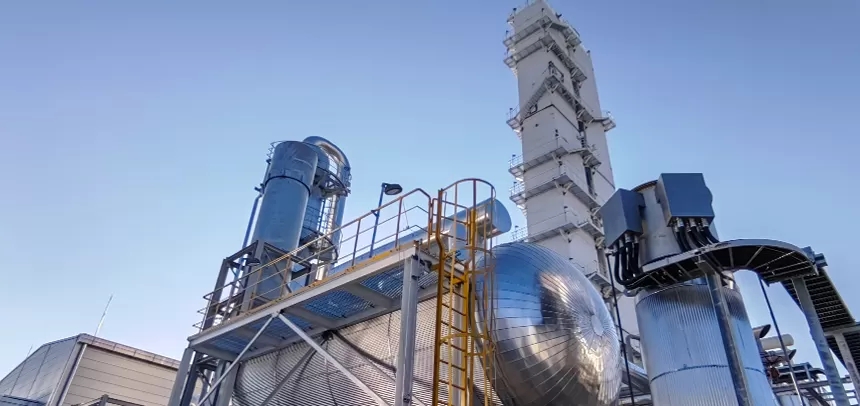
Conclusion: Partnering with Leading Air Separation Unit Manufacturers
Selecting the ideal air separation scale requires balancing immediate capital expenditure (CAPEX) with long-term operating costs (OPEX), project growth phases, and product flexibility. A well-engineered air separation unit does not just produce gas; it acts as an efficiency driver for your entire production line.
As a premier national-level high-tech enterprise, Fortune Gas brings over 40 years of cryogenic innovation to the global stage. Backed by an expansive 54,000-square-meter advanced manufacturing base and an R&D center capable of fabricating extra-large cold box modules, large coil-wound heat exchangers, and fractionation columns, we deliver complete process reliability.
With over 1,000 patented process packages successfully deployed across the United States, Europe, the Middle East, and Southeast Asia, Fortune Gas supports world-class players like Linde, Air Products, Shell, and Sinopec. From highly optimized small-scale units to mega-capacity large scale air separation plant installations, our engineering teams design custom gas solutions that maximize lifecycle ROI.
To find out how our engineering team can optimize the performance and lower the energy footprint of your next project, consult our experts today.
Frequently Asked Questions (FAQ)
What is the primary difference between an Air Separation Unit (ASU) and an Air Separation Plant?
An ASU refers specifically to the core technological equipment package—such as compressors, purification blocks, turbo-expanders, and the cold box—that performs the actual gas separation. An Air Separation Plant represents the entire physical facility, including the ASU, civil infrastructure, storage tanks, truck loading bays, and peripheral utility systems.
Why do some modern medium and small-scale ASUs include an argon recovery system?
Argon accounts for only 0.93% of atmospheric air and is difficult to extract due to a boiling point close to oxygen. However, because argon is highly valuable in electronics and welding, leading manufacturers now engineer efficient mini-rectification columns, enabling smaller plants to capture a highly lucrative secondary revenue stream.
How do multi-unit configurations improve energy efficiency in medium-scale projects?
Cryogenic systems lose significant efficiency when running far below their designed capacity. In volatile or growing markets like the new energy sector, installing a multi-unit combination lets operators turn individual units completely off or on in sequence, ensuring that active machines always operate at peak thermodynamic efficiency.

