Natural gas liquefaction is a highly integrated process where refrigeration performance, equipment configuration, and operating conditions directly influence plant efficiency and reliability. Among the different LNG technologies available today, single mixed refrigerant systems have become an important option for projects that require a balance between process simplicity, energy performance, and operational flexibility.
Unlike refrigeration approaches that use multiple independent cooling cycles, a single mixed refrigerant system uses a carefully selected refrigerant mixture to provide cooling across different temperature ranges during natural gas liquefaction. This requires precise engineering of the refrigerant composition, heat exchange process, compression system, and overall plant integration.
For companies planning LNG projects, choosing the right technology and working with an experienced manufacturer of natural gas liquefaction plant are important steps in achieving long-term performance. A well-designed LNG liquefaction system must not only meet production targets but also maintain stable operation under changing conditions.
This article examines the main engineering considerations behind efficient single mixed refrigerant LNG liquefaction systems, including process design, equipment selection, energy optimization, and project planning factors.
How Single Mixed Refrigerant Technology Enables Natural Gas Liquefaction
The basic principle of a single mixed refrigerant system is based on using a combination of refrigerant components with different boiling points. This mixture allows the refrigeration cycle to provide cooling across a wide temperature range, which is necessary for gradually reducing natural gas temperature until it reaches liquefaction conditions.
During the liquefaction process, natural gas passes through heat exchangers where it exchanges heat with the circulating mixed refrigerant. As the refrigerant changes temperature and phase, it absorbs heat from the natural gas stream and enables the gas to transition into a liquid state.
The main advantage of this approach is the simplified refrigeration arrangement. Compared with some multi-cycle refrigeration configurations, a single mixed refrigerant system can reduce process complexity by relying on one integrated refrigeration loop. This can be beneficial for projects where compact design, easier operation, or modular deployment are important considerations.
However, achieving good performance requires careful engineering. The refrigerant mixture must be selected according to factors such as natural gas composition, ambient temperature, required LNG production capacity, and desired energy efficiency. Small changes in refrigerant balance can influence compressor workload, heat exchanger performance, and overall plant operation.
For this reason, experienced engineering support is essential when developing a natural gas liquefaction facility. Companies evaluating different LNG solutions can review industrial gas and liquefaction equipment solutions to better understand available system configurations and technology options.
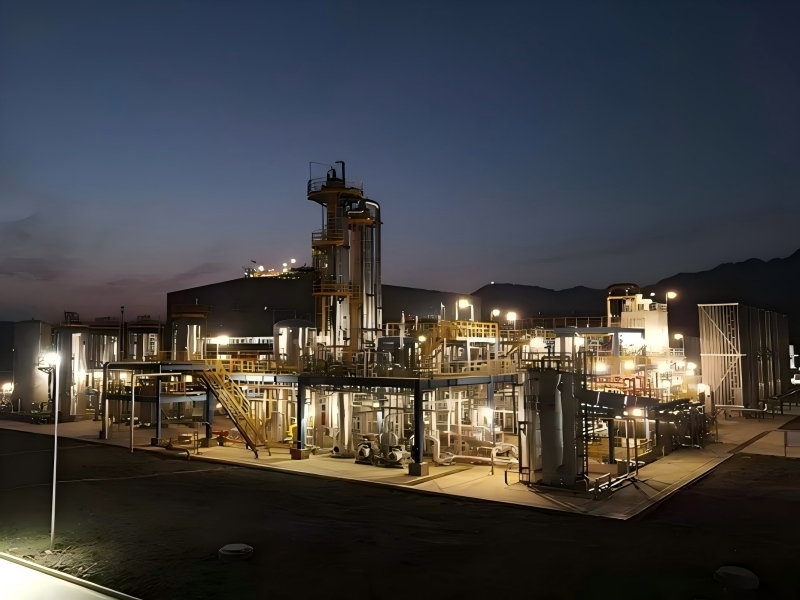
Designing the Refrigerant Cycle for Stable Single Mixed Refrigerant Operation
The refrigerant cycle is one of the most critical parts of a single mixed refrigerant LNG liquefaction system. A well-designed cycle must provide sufficient cooling capacity while maintaining stable operation across different production conditions.
Refrigerant composition is a key design factor. The mixture usually contains several components selected to match the cooling requirements of different temperature ranges. Engineers must balance cooling performance with practical considerations such as refrigerant availability, operating pressure, and system control requirements.
Operating stability is another important consideration. LNG facilities rarely operate under completely constant conditions. Changes in feed gas composition, environmental temperature, or production demand can affect refrigeration performance. A properly optimized refrigerant cycle allows the plant to adapt while maintaining reliable liquefaction output.
Control strategies also influence system performance. Monitoring pressure, temperature, and flow conditions helps operators maintain the desired refrigeration balance. Advanced control systems can support more efficient operation by adjusting process parameters according to real-time conditions.
The following table compares different refrigeration approaches commonly considered for LNG projects:
| Technology Approach | Main Characteristics | Typical Considerations |
|---|
| Single Mixed Refrigerant | Uses one mixed refrigerant loop for cooling across multiple temperature ranges | Requires careful refrigerant design and process optimization |
| Multiple Refrigerant Systems | Uses separate refrigeration cycles for different cooling stages | May provide flexibility but involves greater system complexity |
| Other LNG Liquefaction Configurations | Designed for specific project conditions and production requirements | Technology selection depends on capacity, location, and operating goals |
Engineering the Main Equipment Around an LNG Liquefaction System
A successful LNG project depends not only on the refrigeration process itself but also on how the main equipment is integrated. In a single mixed refrigerant system, compressors, heat exchangers, piping systems, and control equipment must work together as a complete process unit.
Compressors play a major role because they provide the pressure increase needed for refrigerant circulation. Their efficiency directly affects power consumption and operating costs. Selecting suitable compressor capacity and matching it with the refrigeration cycle is an important engineering decision.
Heat exchangers are equally important because they determine how effectively thermal energy is transferred between natural gas and refrigerant streams. High-performance heat exchanger design helps improve liquefaction efficiency while reducing unnecessary energy losses.
The arrangement of equipment also affects plant operation. A practical LNG liquefaction design considers accessibility, maintenance requirements, safety, and future operating conditions. This is one reason why selecting an experienced manufacturer of natural gas liquefaction plant can significantly influence project success.
A qualified manufacturer should understand not only individual equipment components but also how the complete LNG system operates as an integrated process. Fortune Gas applies engineering experience in industrial gas systems to support customers developing natural gas liquefaction solutions for different project requirements.
Balancing Energy Consumption and Liquefaction Performance in Single Mixed Refrigerant Plants
Energy efficiency is one of the most important evaluation criteria for LNG liquefaction plants. Since refrigeration requires significant power input, improving the performance of a single mixed refrigerant system can directly influence operating costs.
One approach to improving efficiency is optimizing heat exchange performance. Effective thermal integration allows the system to recover and reuse cooling capacity, reducing unnecessary refrigeration demand.
Compressor operation is another major factor. Poorly matched compressor performance can increase power consumption and reduce overall plant efficiency. Engineers must consider compressor selection, operating range, and control strategy when designing the refrigeration system.
Energy optimization does not mean maximizing one parameter alone. A practical LNG plant design must balance production capacity, equipment reliability, energy consumption, and maintenance requirements. The most effective solutions are those that deliver stable performance throughout the plant lifecycle.
Where Single Mixed Refrigerant Systems Fit in Modern LNG Projects
The application of single mixed refrigerant technology depends largely on project conditions, including production scale, gas composition, location, and infrastructure requirements.
This technology can be suitable for modular LNG facilities and projects where simplified process design is valuable. Compact system arrangements can help reduce installation complexity and support deployment in locations where space or construction conditions create challenges.
For developing LNG markets, flexible liquefaction solutions are increasingly important. A reliable manufacturer of natural gas liquefaction plant can help evaluate whether a single mixed refrigerant configuration matches the technical and economic requirements of a specific project.
As natural gas infrastructure continues to evolve, LNG technologies that combine efficiency with operational flexibility will remain important for both traditional energy projects and emerging gas applications.
Choosing an LNG Liquefaction Solution for Long-Term Project Performance
Selecting an LNG liquefaction technology requires a comprehensive evaluation rather than focusing on one individual specification. Project owners need to consider production targets, feed gas characteristics, energy consumption, maintenance requirements, and future expansion possibilities.
The experience of the technology provider is also a critical factor. A reliable manufacturer of natural gas liquefaction plant should have knowledge of process engineering, equipment integration, and practical operation requirements.
Technical communication during the early project stage can help identify suitable solutions and avoid design challenges later. Companies evaluating LNG liquefaction systems can contact Fortune Gas to discuss project requirements and technical approaches based on their specific application conditions.
Conclusion
Designing an efficient single mixed refrigerant LNG liquefaction system requires careful consideration of refrigeration cycle design, equipment integration, energy performance, and long-term operating conditions.
When properly engineered, a single mixed refrigerant system can provide an effective solution for natural gas liquefaction projects by combining process simplicity with reliable performance. From refrigerant optimization to equipment selection, every design decision contributes to the overall efficiency and stability of the LNG plant.
Working with an experienced manufacturer of natural gas liquefaction plant helps project developers select suitable technologies and build systems that meet both current production requirements and future operational goals.
Frequently Asked Questions (FAQ)
1.What is a single mixed refrigerant LNG liquefaction system?
A single mixed refrigerant LNG liquefaction system uses one refrigerant mixture to provide cooling across different temperature ranges required for natural gas liquefaction.
2.What are the main advantages of single mixed refrigerant technology?
It can offer a simplified refrigeration configuration, reduced system complexity, and flexible application for suitable LNG projects.
3.Why is refrigerant composition important in LNG liquefaction?
The refrigerant mixture determines cooling performance, energy efficiency, and operating stability, making its design an important part of the process.
4.What equipment is essential in a single mixed refrigerant LNG plant?
Major equipment includes compressors, heat exchangers, piping systems, valves, and process control systems that work together as an integrated unit.
5.How does a manufacturer of natural gas liquefaction plant support LNG projects?
A manufacturer provides engineering expertise, equipment integration, and technical solutions to help develop reliable LNG liquefaction systems.
6.What factors should be considered when selecting LNG liquefaction technology?
Important factors include gas composition, production capacity, energy efficiency, operating conditions, equipment reliability, and project objectives

