For a large industrial project, choosing the right nitrogen generator manufacturer is not just about comparing capacities, specifications, or quotations. In industries such as petrochemicals, semiconductors, new energy, and chemicals, the nitrogen system often supports critical production processes and must operate reliably over long periods. A well-designed system can help maintain stable production while controlling energy use and long-term operating costs.
Large nitrogen projects also involve multiple engineering disciplines. Air compression, purification, cryogenic separation, product pressure, plant controls, equipment manufacturing, site installation, and commissioning all need to work as one integrated system. As a result, project owners should evaluate a supplier based on its ability to deliver the complete plant rather than one individual piece of equipment.
For buyers searching for a China nitrogen package generator manufacturer, the following five areas provide a practical framework for comparing potential suppliers before placing an order.
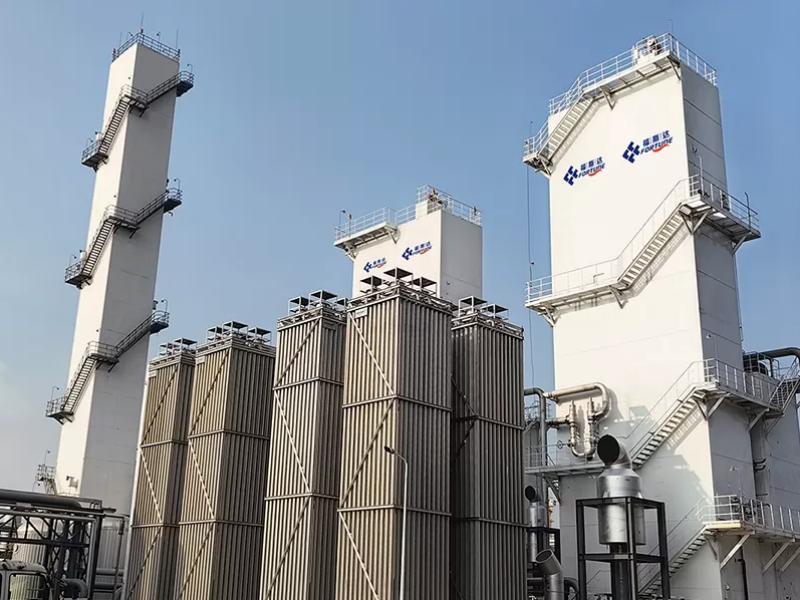
Engineering Capability and Nitrogen Process Design
A capable nitrogen generator manufacturer should be able to translate actual nitrogen demand into a complete process design that balances purity, capacity, pressure, reliability, and energy consumption.
The evaluation should begin with process engineering. Before recommending a plant configuration, the manufacturer needs to understand how nitrogen will be used. Important inputs include normal and peak flow, required purity, delivery pressure, operating hours, gaseous or liquid product requirements, site conditions, utility availability, and expected changes in future demand.
For a large industrial project, simply selecting equipment according to nominal nitrogen capacity is not enough. Two facilities requiring a similar flow rate may need significantly different systems because of differences in pressure, purity, backup philosophy, load variation, or integration with downstream processes.
The manufacturer should therefore be able to explain why a particular process has been selected and how major sections of the plant interact. For cryogenic nitrogen generation, this includes air compression and pretreatment, molecular sieve purification, main heat exchange, refrigeration, distillation, product delivery, and process control.
Energy performance also needs to be evaluated at the system level. Compressor configuration, nitrogen recovery, column design, heat exchanger performance, operating pressure, and turndown strategy can all affect long-term electricity consumption. A strong engineering supplier should optimize these parameters together instead of presenting energy efficiency as a feature of one isolated component.
Manufacturing Quality, Testing, and Quality Control
Manufacturing capability determines whether the process design can be converted into equipment that performs reliably under continuous industrial operating conditions.
Large nitrogen packages may contain pressure vessels, columns, heat exchangers, piping systems, cold-box structures, valves, instrumentation, and control components. The manufacturer therefore needs appropriate fabrication capability, inspection procedures, material traceability, welding control, and dimensional quality management.
Project owners should ask how critical equipment is manufactured and tested rather than relying only on a general statement that the plant meets international standards. Depending on the project location and equipment scope, applicable pressure vessel codes, electrical requirements, inspection standards, and customer-specific specifications may vary.
| Evaluation Area | What to Check | Why It Matters |
|---|
| Process Engineering | Capacity, purity, pressure, process selection and energy design | Determines whether the system matches actual operating requirements |
| Manufacturing Capability | Cold boxes, vessels, columns, piping and key cryogenic equipment | Reduces interface risk between design and fabrication |
| Quality Control | Material control, welding, inspection and testing procedures | Supports equipment integrity and reliable operation |
| Project Management | Engineering coordination, schedule control and documentation | Helps keep complex projects on schedule |
| Commissioning Support | Installation supervision, testing and start-up assistance | Reduces risk during the transition from construction to operation |
| After-Sales Service | Technical support, spare parts and troubleshooting capability | Supports long-term plant availability |
Factory integration capability can also be important for modular or packaged nitrogen systems. Completing more assembly and inspection before shipment can reduce the amount of complicated work required on site and improve consistency between engineering drawings and the delivered equipment.
When comparing suppliers, project teams can review a manufacturer's broader cryogenic technologies and product capabilities to understand whether it has experience with the major equipment involved in the proposed nitrogen system.
Project Execution, Installation, and Commissioning Experience
For a large nitrogen generation project, successful delivery depends on engineering coordination and site execution as much as equipment manufacturing.
A nitrogen plant typically involves multiple interfaces between the manufacturer's package and the customer's utilities, foundations, electrical systems, control infrastructure, cooling systems, product pipelines, and downstream processes. Poor interface management can cause delays even when individual pieces of equipment have been manufactured correctly.
When evaluating a nitrogen generator manufacturer, buyers should therefore examine previous projects that are similar in capacity, process type, industry, and project scope. A supplier experienced only with small stand-alone generators may not have the same project management requirements as a manufacturer responsible for large cryogenic units integrated into petrochemical or new energy facilities.
Installation planning should begin before equipment arrives on site. Lifting conditions, module dimensions, equipment positioning, piping interfaces, commissioning sequence, utilities, and temporary operating requirements should all be considered during engineering.
Commissioning capability is equally important. Large cryogenic systems require a controlled transition through inspection, pressure testing, purging, cooling, start-up, process stabilization, and performance verification. Experienced commissioning engineers can help identify abnormal operating conditions early and coordinate adjustments between process, mechanical, electrical, and instrumentation teams.
For international projects, buyers should also confirm how the manufacturer supports overseas installation and commissioning, including personnel dispatch, documentation, remote technical assistance, and communication between the factory engineering team and site personnel.
After-Sales Support and Long-Term Operating Reliability
The value of an industrial nitrogen system should be evaluated over its operating life, making after-sales capability an important part of supplier selection.
Large process plants are generally expected to operate continuously for long periods. Once the nitrogen system becomes integrated into production, an unexpected shutdown can affect downstream units that depend on nitrogen for inerting, purging, blanketing, process control, or product manufacturing.
Project owners should therefore understand what happens after commissioning. A suitable supplier should have a clear process for troubleshooting, spare parts support, operating guidance, technical consultation, and assistance when plant conditions change.
Remote diagnostic capability can be particularly useful for overseas installations because not every operating issue requires immediate site intervention. Process trends and operating data may help engineers identify changes in equipment performance, process balance, or control conditions before deciding whether on-site service is necessary.
Buyers should also consider whether the manufacturer can support future modifications. Production expansion, higher nitrogen demand, changes in purity requirements, new downstream units, or energy-efficiency upgrades may require engineering support years after the original project is completed.
This is why evaluating only the purchase price can be misleading. Plant availability, energy consumption, maintenance requirements, spare parts availability, and access to experienced engineering support can have a much greater impact on the total cost of ownership over long-term operation.
Why Choose Fortune Gas for Large-Scale Nitrogen Generation Projects
Fortune Gas combines cryogenic process engineering, equipment manufacturing, project execution, commissioning, and after-sales support for industrial nitrogen generation projects.
Its high-efficiency nitrogen generation portfolio includes systems producing both gaseous and liquid nitrogen, with projects serving industries such as petrochemicals, new energy, and semiconductor manufacturing. This experience is particularly relevant to customers whose nitrogen requirements go beyond a small stand-alone generator and require a fully engineered industrial plant.
Another advantage is the company's broader cryogenic engineering and manufacturing capability. Nitrogen systems can involve cold boxes, distillation equipment, heat exchangers, pressure vessels, piping, controls, and other process equipment. Having process engineering and major equipment manufacturing capabilities within the same project organization can help reduce coordination gaps between design and fabrication.
Fortune Gas also supports installation supervision, commissioning, remote technical assistance, spare parts, and long-term operating services. For international industrial projects, this allows the relationship to continue beyond equipment shipment and into plant start-up and operation.
When evaluating a China nitrogen package generator manufacturer for a large project, customers should focus on whether the supplier can take responsibility for the complete technical and project lifecycle. Fortune Gas's experience in large cryogenic nitrogen systems provides a practical basis for projects that require high capacity, stable continuous supply, and integration with complex industrial processes.
Project owners who are planning a new nitrogen generation plant or upgrading an existing system can contact Fortune Gas with their required nitrogen capacity, purity, pressure, operating profile, site conditions, and project scope for preliminary technical evaluation.
Conclusion
Choosing a nitrogen generator manufacturer for a large industrial project should involve more than comparing capacity and purchase price. Engineering capability, process efficiency, manufacturing quality, project execution, commissioning experience, and long-term technical support all influence how successfully the plant will perform after start-up.
The strongest supplier is one that can understand the customer's actual nitrogen demand, develop an appropriate process configuration, manufacture critical equipment to the required standards, manage project interfaces, and continue supporting the system throughout its operating life.
For project owners evaluating large cryogenic or packaged nitrogen generation systems, considering these factors early in supplier selection can reduce technical risk and create a stronger foundation for reliable, efficient long-term nitrogen supply.
Frequently Asked Questions
1. What should I check when choosing a nitrogen generator manufacturer?
Check the manufacturer's process engineering capability, comparable project experience, manufacturing and quality-control systems, installation and commissioning support, and long-term after-sales service.
2. Why is process design important for a large nitrogen generation system?
Capacity alone does not define the correct system. Purity, pressure, operating profile, load variation, energy consumption, liquid requirements, and site conditions all affect the final process design.
3. Should I evaluate previous nitrogen projects from the manufacturer?
Yes. References with similar capacity, industry, process type, and project scope provide useful evidence that the supplier has handled comparable engineering and execution requirements.
4. What project information should I provide when requesting a nitrogen plant proposal?
Provide required nitrogen capacity, purity, delivery pressure, gaseous or liquid demand, operating hours, site conditions, available utilities, project location, and expected scope of supply.

